Sinking Funds: The Budgeting Trick Most People Miss
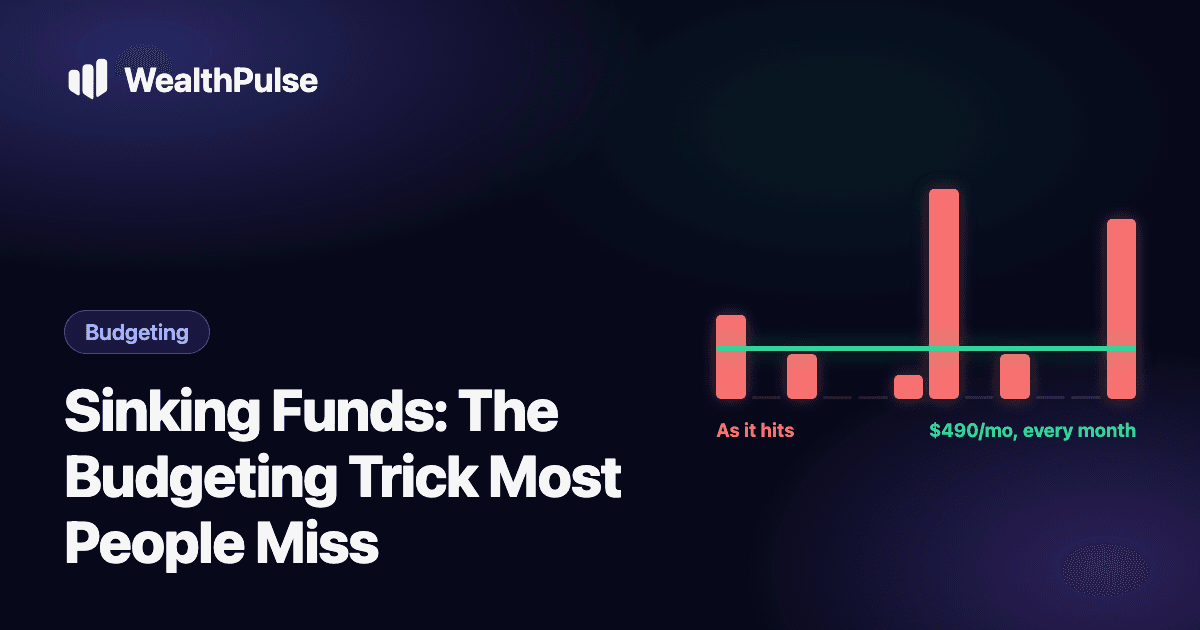
Here's an uncomfortable pattern: your budget works beautifully for two months, then car insurance comes due, or December happens, and the whole thing "fails." Except nothing failed. The budget just never accounted for expenses that arrive on a schedule you already knew. The fix is a tool with an old-fashioned name and an outsized effect: the sinking fund.
What is a sinking fund?
A sinking fund is money you save a little each month for a specific, predictable future expense, like holiday gifts, insurance premiums, car repairs, or a vacation, so the bill is fully funded before it arrives. The term comes from bond finance, where a government or company sets money aside on a schedule to retire debt; the household version retires budget surprises instead.
The insight underneath it is simple and slightly humbling: most "surprise" expenses aren't surprises. They're irregular. Car registration comes yearly. Holidays come in December, every single year. Tires wear on a schedule. These expenses don't fit a monthly budget because they aren't monthly, so they crash into whatever month they land on, and that's usually when the credit card absorbs them.
Sinking fund vs. emergency fund: not the same job
The two get conflated constantly, and the confusion is expensive. An emergency fund is for the genuinely unpredictable: a layoff, a medical event, the tree through the roof. A sinking fund is for the predictable-but-irregular: known bills on known timelines. The distinction matters because raiding your emergency fund for Christmas gifts means treating December as an emergency, and then the real emergency finds a smaller cushion. Different risks, different buckets. (Where the emergency fund fits your bigger picture: it's the liquid layer in your net worth statement.)
The math: embarrassingly simple, weirdly life-changing
Total cost, divided by months until the bill. That's the entire formula:
| Expense | Annual cost | Monthly set-aside |
|---|---|---|
| Holidays & gifts | $1,800 | $150 (starting January) |
| Car insurance (semi-annual $600) | $1,200 | $100 |
| Car upkeep & registration | $900 | $75 |
| Vacation | $1,500 | $125 |
| Annual subscriptions & renewals | $480 | $40 |
| Total | $5,880 | $490/month |
Two reactions are normal here. First: "$490 a month?!" But you're spending that already; it's just currently arriving as four budget crises and a January credit card hangover instead of a calm line item. The sinking fund doesn't cost more, it moves the timing. Second: notice how the December that used to require $1,800 in one month now requires $0, because it was paid for across twelve.
That last row deserves a special mention. Annual renewals (software, memberships, domains, insurance add-ons) are the sneakiest category because they auto-charge. A pass through your subscription tracker surfaces every one of them with amounts and renewal dates, which is your sinking fund shopping list, pre-written.
Setting yours up in 20 minutes
1. List your budget-wreckers. Scan the last twelve months of transactions for every lumpy expense that blew up a month: the premiums, the trips, the repairs, the gift seasons. A handful of categories covers most households.
2. Divide and automate. Cost ÷ months = monthly amount. Set an automatic transfer for payday, treating the total like a bill. In your budget, this lives as its own category, which honestly is the trick's whole magic: it converts irregular chaos into one boring, fixed monthly line.
3. Park it where it earns. A high-yield savings account is the standard home: liquid, separated from spending money, and paying you while it waits. One account with tracked categories beats six accounts; the tracking matters more than the plumbing. Give each fund a target and date in Goals so "vacation fund" is a progress bar, not a vibe.
4. Spend it guilt-free, then refill. This is the part people forget to enjoy: when the bill comes, you just pay it. Fully funded, zero stress, no card balance, no raided emergency fund. Then the auto-transfer starts rebuilding for next year without you thinking about it.
Why such a simple trick works so well
Sinking funds fix the two ways budgets actually die. Mechanically, they smooth lumpy expenses into flat monthly lines, so no single month has to absorb a spike, and the spike never lands on a card in the low 20s (where a $1,800 December can quietly become a multi-year balance; see what minimum payments really cost). Psychologically, they end the shame spiral: the "failure" feeling that makes people abandon budgets entirely usually traces back to a predictable expense the budget ignored. Plan for the lumps and the budget stops failing, which means you stop quitting it. If your budget follows the 50/30/20 rule, sinking funds simply live inside their natural buckets: the insurance fund is a need, the vacation fund is a want, each one flattened into a monthly slice.
The bottom line
December is not a surprise. Car insurance is not a surprise. Tires are barely a surprise. A sinking fund is just a budget that admits time exists: list the lumpy expenses, divide by the months, automate the transfer, and pay every "surprise" bill with money that's been quietly waiting for it. It's the least glamorous trick in personal finance and, dollar for dollar of effort, maybe the most effective.
Turn every surprise bill into a funded goal. WealthPulse tracks your sinking funds as visible goals, catches the annual renewals hiding in your subscriptions, and keeps the whole budget honest.
Start your free 7-day trial →Frequently asked questions
What is a sinking fund?
A sinking fund is money you set aside a little each month for a specific, predictable future expense: holiday gifts, car insurance premiums, annual subscriptions, vacations, car repairs. When the bill arrives, the money is already there, so it never disrupts that month's budget or lands on a credit card.
What's the difference between a sinking fund and an emergency fund?
An emergency fund is for the unpredictable: job loss, medical surprises, the genuinely unforeseen. A sinking fund is for the predictable-but-irregular: expenses you know are coming and roughly when. Using your emergency fund for Christmas gifts means December surprised you, and December is never a surprise.
How much should I put in a sinking fund?
Work backwards: total cost divided by months until the bill. $1,800 of holiday spending starting in January is $150 a month. A $600 semi-annual insurance premium is $100 a month. Stack all your funds and the monthly total is usually a few hundred dollars across categories.
Where should I keep sinking funds?
A high-yield savings account works well: liquid, earning interest, and separated from daily spending. You don't need a separate bank account per fund; one account with tracked categories (or a bank that supports buckets) is simpler and works the same.
What sinking fund categories should I have?
Start with the expenses that have wrecked past budgets. Common ones: holidays and gifts, car repairs and registration, insurance premiums paid annually or semi-annually, vacations, annual subscriptions, medical deductibles, home maintenance, and back-to-school. A handful of funds covers most households; you don't need twenty.
This article is general educational information, not financial advice. Example amounts are illustrative; your categories and costs will differ. For guidance specific to your situation, consult a qualified financial professional.
Take control of your money
Budgeting, investing, and AI analysis in one dashboard. 7-day free trial.
Start 7-day free trial →